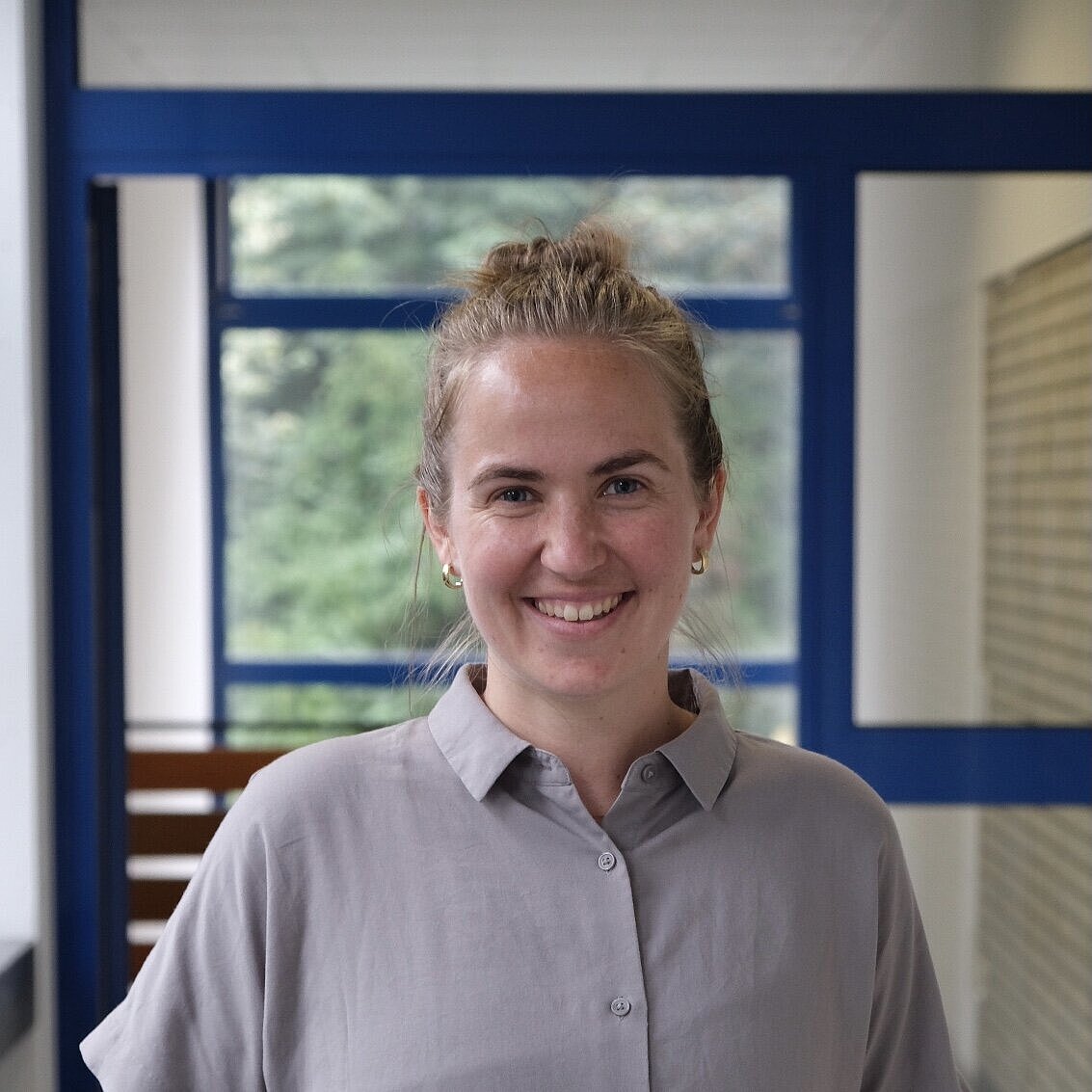
Dr. Magdalena Wischnewski leads the Young Investigator Group Human Factors in AI Systems at the Research Center Trustworthy Data Science and Security. Her research focuses on human-centered trustworthy AI, investigating how artificial intelligence shapes the way people think, feel, interact, and make decisions. A central aspect of her work is understanding how trust in AI systems can be better assessed, calibrated, and supported in ways that align with human needs and societal expectations.
Her research addresses topics such as trust calibration, trust assessments, cognitive and social attributions toward AI, and the auditing of AI systems through mechanisms such as AI seals of trust. By combining perspectives from psychology, computer science, and human–computer interaction, she examines AI not only as a technical system, but also as a social and cognitive phenomenon that increasingly influences everyday life.
As a psychologist by training, Magdalena Wischnewski primarily works with quantitative and empirical methods, with a particular focus on experimental research designs. Her work aims to contribute to frameworks and practical recommendations for the human-centered design, evaluation, and governance of trustworthy AI systems.
Before establishing her Young Investigator Group, Magdalena Wischnewski completed her PhD in Social Psychology at the University of Duisburg-Essen under the supervision of Prof. Nicole Krämer. Her dissertation Misinformation on social media: Investigating motivated reasoning through an identity-protection model, completed summa cum laude, investigated misinformation on social media and examined how emotions and social identities contribute to motivated reasoning and the belief in misinformation. She subsequently continued her academic work as a PostDoc at the RC Trust before joining RC Trust with her own research group. Her international research experience includes appointments at the Queensland University of Technology, Utrecht University, and the Decision Research Institute in the United States.