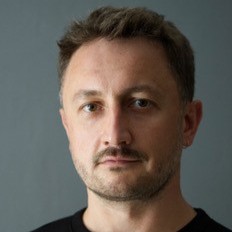
Matthias Schmidmaier is affiliated with the Human-AI Interaction Group at TU Dortmund University and the HCI research group at LMU Munich, where he is currently completing his PhD under the supervision of Prof. Sven Mayer. He holds a Diploma (Dipl.-Inform.) in Media Informatics from LMU Munich (2012). After several years in industry, he joined fortiss, the Research Institute of the Free State of Bavaria for software-intensive systems and services, as a Research Engineer. Subsequently, he joined a technology startup while continuing his academic research at LMU Munich under the supervision of Prof. Heinrich Hußmann. Since 2025, he has been conducting his doctoral research as a member of the Human-AI Interaction Group at TU Dortmund University.
Matthias Schmidmaier’s current research focuses on empathic interaction between humans and intelligent agents. In particular, he investigates how empathy can be perceived, modeled, and evaluated in conversational agents, multimodal large language models, and social robots. Additional research interests included affective computing, computer vision, and implicit human behavior analysis.
2025
[1] F. Bemmann, M. Schmidmaier, V. Paneva, D. Murtezaj, A. Wiethoff, and S. Mayer, “Workshop on societal effects of AI in mobile social media,” in Adjunct Proceedings of the 27th International Conference on Mobile Human-Computer Interaction, Sharm El-Sheikh, Sep. 2025, doi: 10.1145/3737821.3743750.
[2] M. Schmidmaier, J. Rupp, and S. Mayer, “Using a secondary channel to display the internal empathic resonance of LLM-driven agents for mental health support,” in Proceedings of the 27th International Conference on Multimodal Interaction, Canberra, Oct. 2025, pp. 294–304, doi: 10.1145/3716553.3750759.
[3] M. Schmidmaier, J. Rupp, C. Harrich, and S. Mayer, “Using nonverbal cues in empathic multi-modal LLM-driven chatbots for mental health support MHCI039,” Proceedings of the ACM on human-computer interaction, vol. 9, no. 5, p. , Sep. 2025, doi: 10.1145/3743724.
[4] M. Schmidmaier, L. Schöberl, J. Rupp, and S. Mayer, “A systematic and validated translation of the perceived empathy of technology scale from English to German,” in Proceedings of the Mensch und Computer 2025, Chemnitz, Aug. 2025, doi: 10.1145/3743049.3743082.
2024
[1] M. Schmidmaier, C. Harrich, and S. Mayer, “Increasing large language models context awareness through nonverbal cues,” in Mensch und Computer 2024 - Workshopband, Karlsruhe, Germany, 2024, doi: 10.18420/muc2024-mci-ws09-190.
[2] M. Schmidmaier, J. Rupp, D. Cvetanova, and S. Mayer, “Perceived Empathy of Technology Scale (PETS): measuring empathy of systems toward the user,” in CHI ’24: Proceedings of the 2024 CHI Conference on Human Factors in Computing Systems, Honolulu, HI, May 2024, doi: 10.1145/3613904.3642035.
2020
[1] M. Schmidmaier, H. Hußmann, D. M. Runge, and M. Schmidmaier, “Beep Beep: Building Trust with Sound,” in Extended Abstracts of the 2020 CHI Conference on Human Factors in Computing Systems, May 2020, doi: 10.1145/3334480.3382848.
2019
[1] M. Schmidmaier, Z. Han, T. Weber, Y. Liu, H. Hußmann, and M. Schmidmaier, “Real-Time Personalization in Adaptive IDEs,” in Adjunct Publication of the 27th Conference on User Modeling, Adaptation and Personalization, Jun. 2019, doi: 10.1145/3314183.3324975.
[2] G. Wiegand, M. Schmidmaier, T. Weber, Y. Liu, H. Hussmann, and M. Schmidmaier, “I Drive - You Trust,” in Extended Abstracts of the 2019 CHI Conference on Human Factors in Computing Systems, Apr. 2019, doi: 10.1145/3290607.3312817.