27.11.2026
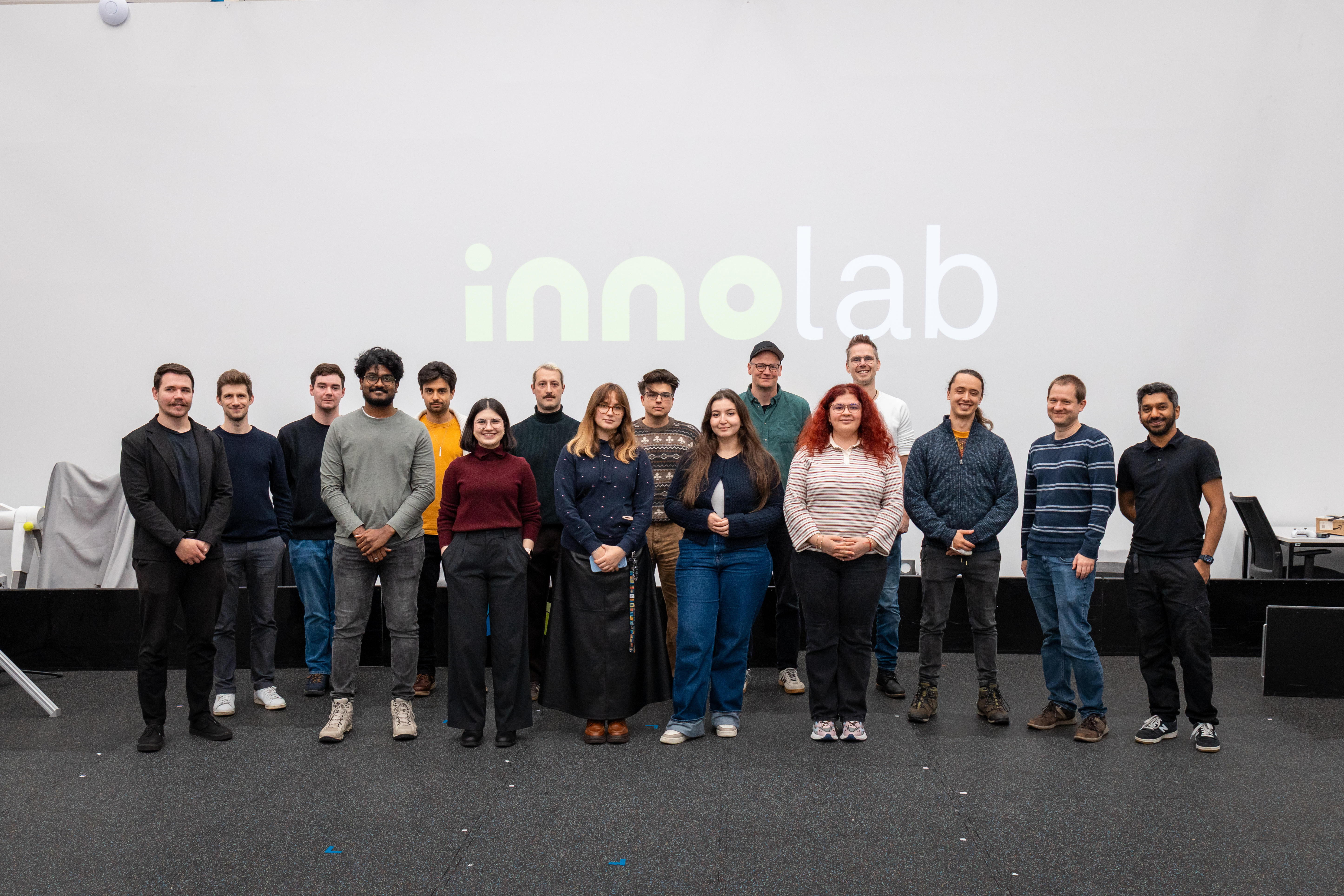
The RC Trust Graduate School visited the Fraunhofer Institute for Material Flow and Logistics and the Chair of Material Handling and Warehousing at TU Dortmund University to discuss current research questions.
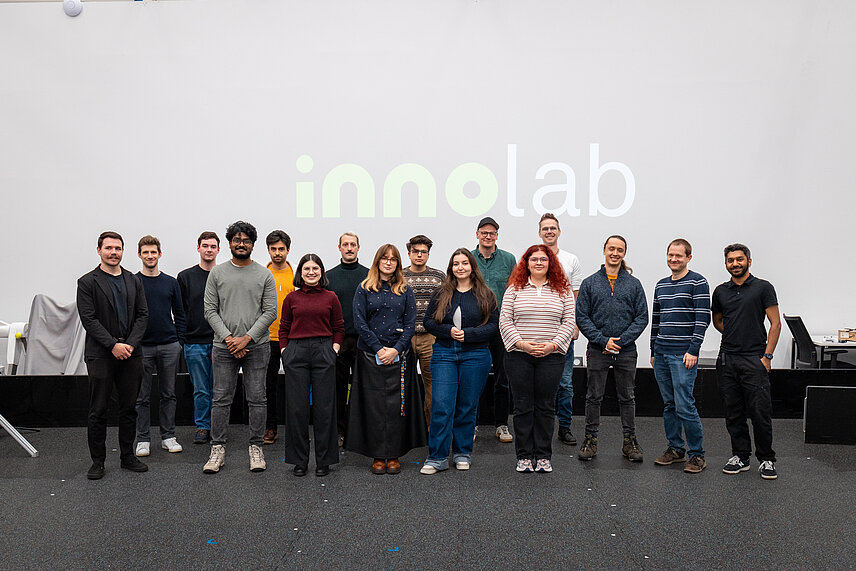 Graduate School at Fraunhofer Institute for Material Flow and Logistics and the Chair of Material Handling and Warehousing © Patrick Wilking
Whether it is loading containers onto cargo ships or locating a single item within a row of shelves, the Fraunhofer Institute for Material Flow and Logistics IML is one of the world's leading centers for logistics research. To meet the needs of industry, new technologies are constantly being developed and tested for their practical applications. Through close collaboration with companies and scientific institutions, including TU Dortmund University, the institute plays an important role in transferring scientific findings into industrial practice.
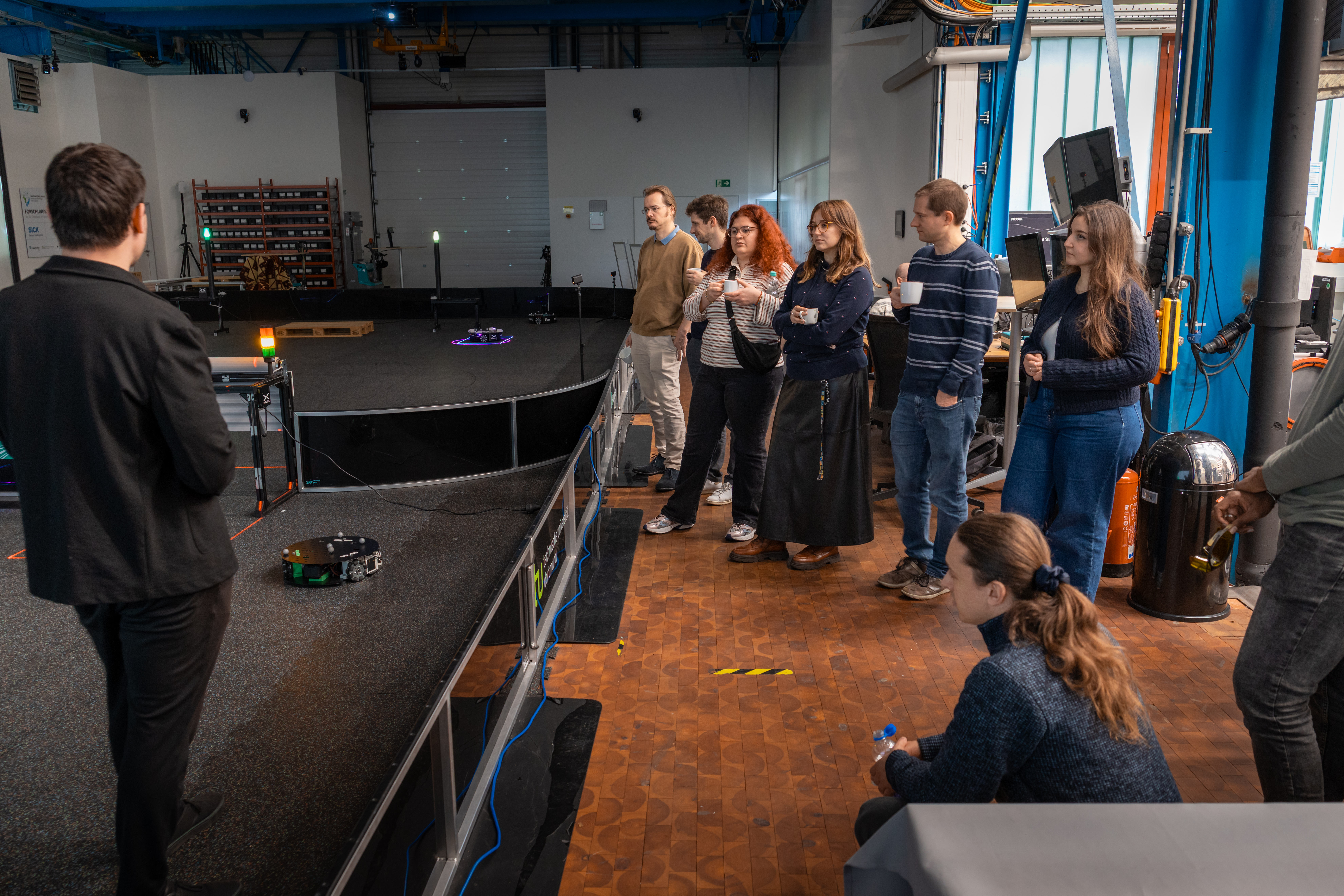
During a field trip organized by the Graduate School, the doctoral researchers from the RC Trust were able to see this for themselves at Fraunhofer IML in Dortmund. In addition to gaining insights into the research, the field trip offered the early-career researchers the opportunity to examine their own research questions in the context of the prototypes presented and to exchange ideas with researchers from other disciplines.
Fingerprint of a Euro Pallet
During a tour of the research halls, workshops, and laboratories, the doctoral researchers first learned how the institute operates. In specially designated areas, for example, robots are developed and can be tested directly in simulated work environments. Researchers from the Chair of Material Handling and Warehousing at TU Dortmund University also presented specific research projects. Among them was an AI-based system that uses facial recognition methods. The difference was that instead of faces, the system scanned the pressed-wood blocks of Euro pallets. The system recognized the unique patterns in the arrangement of the wood chips, which can be used to identify a pallet much like a fingerprint. In the future, this could make attached barcodes obsolete. When asked whether signs of wear and tear could affect recognition accuracy, the researchers explained that the system is relatively robust and can still recognize pallets even if the surface is discolored or scratched.
A Step Out of the Darkness
Next, a so-called event camera was presented. Unlike conventional cameras, it detects changes in brightness at individual pixels rather than capturing complete images at regular intervals. As long as nothing moved in front of the camera and the lighting remained unchanged, the screen was nearly black. Only when people or objects moved did points of light appear along their outlines. This technology can be used, for example, in mobile robots when they need to detect changes in their environment particularly quickly. During the discussion, the question arose as to whether combining this technology with thermal imaging cameras could improve the reliability of perception.
Unease with Exposed Rotor Blades
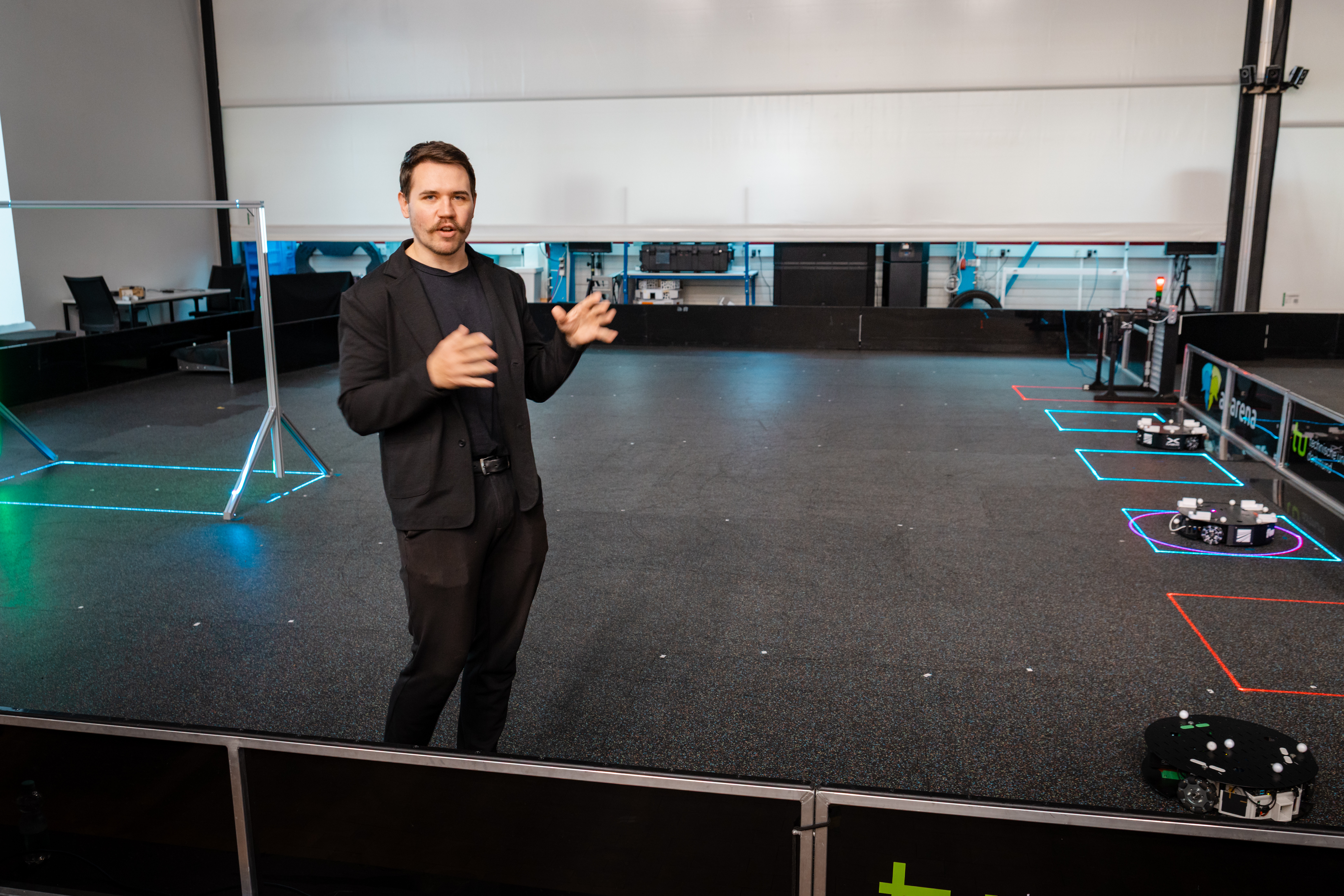
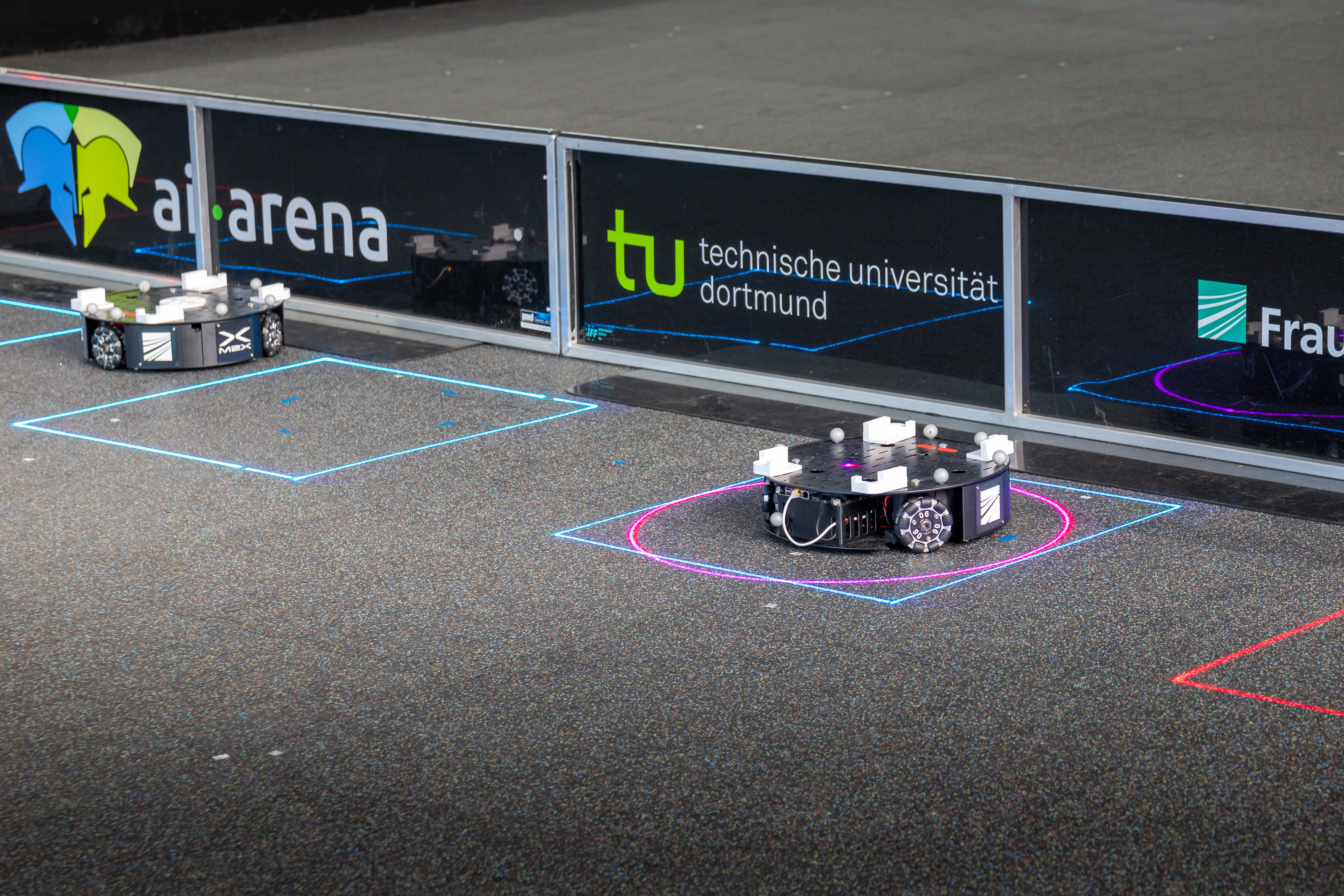
Just how closely the research questions of different disciplines are intertwined also became clear during the presentation of mobile transport robots and the simulation of a drone swarm. While some participants were interested in how collision-free movements in the air could be guaranteed, others wondered what feelings the interaction between humans and technology evokes.
When drones are used in a simulated work environment, questions therefore arise not only about their technical capabilities but also about the impact their design alone can have on people. Different drone models evoked different impressions. The model with exposed rotor blades was perceived as less trustworthy than the model with shielded rotor blades. While the flight performance of the models did not differ, the level of trust in the drones and people's willingness to work with each model did.
Collaboration Between Logistics and Psychology
A completed Incubator Project funded by the RC Trust demonstrates that such questions can lead to joint research efforts. In collaboration with the research groups led by Prof. Annette Kluge at Ruhr University Bochum and RC Trust Prof. Markus Pauly at TU Dortmund University, the researchers investigated how people react to a drone guiding new employees through a warehouse. While one group of researchers developed the technical scenario, the other examined how the participants reacted, for example, to the drone's speed and proximity. The project has resulted in several scientific publications.At the end of the field trip to Fraunhofer IML, there was ample time for participants to exchange ideas and discuss potential research approaches and project ideas.
About Graduate School
The RC Trust Graduate School brings doctoral researchers together with scholars from different disciplines and institutions. Through talks and discussion, it creates space for interdisciplinary exchange, new methodological perspectives, and questions that extend beyond individual PhD projects.
Category
- Network
- Event
Author
Patrick Wilking