19.06.2026
At ICA 2026 in Cape Town, RC Trust researchers presented work on AI, trust, science communication, privacy, and digital intimacy.
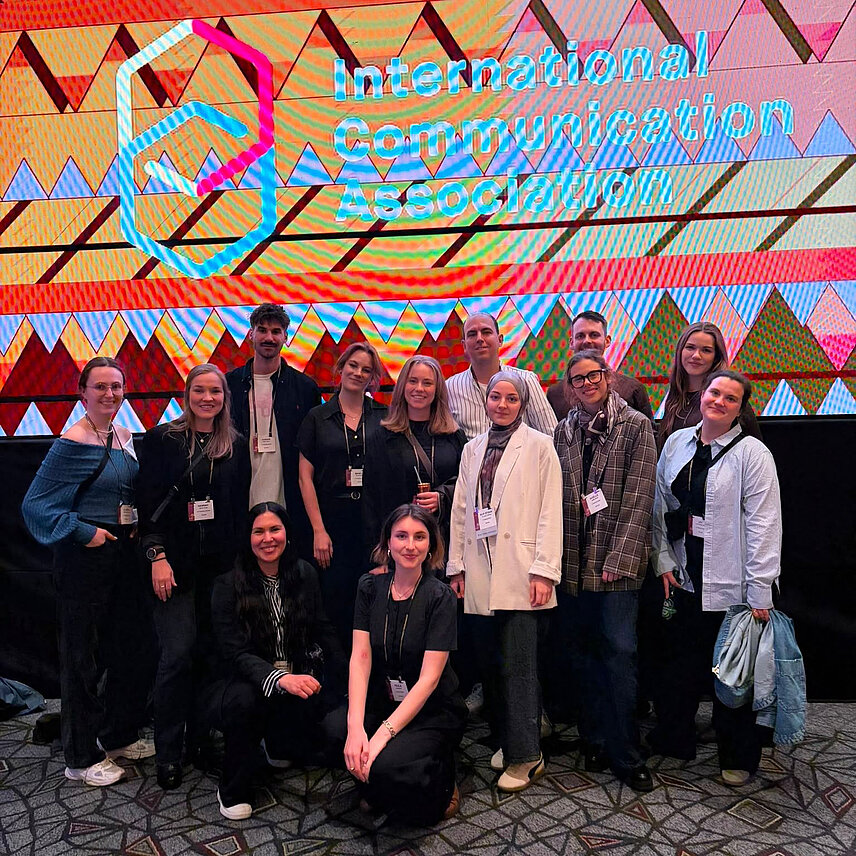
From artificial intelligence and misinformation to science communication, privacy, and digital intimacy: researchers from the Research Center Trustworthy Data Science and Security (RC Trust) were represented at the 76th Annual Conference of the International Communication Association (ICA), which took place from 4 to 8 June 2026 in Cape Town, South Africa.
The ICA Annual Conference is one of the central international meeting points for communication research, I discussing how communication shapes societies, technologies, institutions, and everyday life. For RC Trust, the conference offered a particularly fitting forum as trust in digital technologies is not only a technical question. It is also shaped by communication – by how people understand AI systems, how they evaluate information, how they respond to explanations, how they protect their privacy, and how digital technologies enter increasingly intimate parts of social life.
This connection was reflected across several RC Trust contributions to the ICA 2026 program. Researchers from three RC Trust groups were represented: Social Psychology: Media & Communication led by Prof. Nicole Krämer, Human Understanding of Algorithms and Machines led by Prof. Nils Köbis, and the Young Investigator Group Intimacy with and through Technology led by Dr. Jessica Szczuka.
A strong focus lay on how people perceive and interpret artificial intelligence. Dr. Bianca Nowak, Prof. Nicole Krämer, and Prof. Nils Köbis contributed to the Human-Machine Communication session “Beyond the Uncanny Valley: Epistemic and Affective Boundaries in HMC” with the paper “Consciousness, Mind Perceptions, and Emotional Reactions to AI: A Mixed-Methods Study Across Five Countries.” The study examined how people attribute agency, experience, and consciousness to AI systems, and how these perceptions relate to emotional reactions toward AI.
Questions of trust also appeared in contributions from Social Psychology: Media & Communication. Prof. Nicole Krämer was co-author of “Mind the Partner: Are Socio-Cognitive Processes Different for Human Vs. Disembodied AI Co-Agents?”, which looked at how humans coordinate with AI systems as collaborative partners. In addition, Nur Efsan Cetinkaya presented the paper “Beyond Transparency: How Real Explanations, Placebic Explanations, and Trust Seals Influence User Trust and Understanding,” co-authored with Nicole Krämer. The paper addressed a key issue in trustworthy technology: whether explanations and trust signals actually help users understand systems – or merely create the impression of transparency.
Several contributions connected trust with science communication. Dr. Bianca Nowak was involved in “Bite-Sized Science: The Impact of Incidental Exposure to Science Information in Short-format Videos on Knowledge, Online Engagement, and Protective Behaviors,” which examined what happens when people come across science content in short social media videos; if they learn from it, and how it shapes their behaviour online and offline. She was also co-author of “No Halo Effect of Scientific Validity? How Science-related Visualizations, Attitudes, and Reactance Influence the Perception of Dubious Messages and Sources on Social Media.” This study examined whether scientific-looking visualizations can influence the credibility of dubious messages and sources.
The question of who communicates science was taken up in another RC Trust contribution. In “Does It Matter Who Is Talking About Science? Comparing Epistemic Authority and Knowledge Outcomes Across Perceived Human and AI Actor Identities,” Dr. Bianca Nowak, Antonia Rosada, and Prof. Nicole Krämer investigated whether it makes a difference if science in podcasts is presented by a scientist, a journalist, an influencer, or an AI. While speaker identity did not affect what listeners learned, it shaped how informed they felt, depending mainly on the speaker's perceived trustworthiness and empathy. The paper connected directly to current debates on epistemic authority, credibility, and the role of AI in public knowledge environments.
RC Trust researchers also addressed how generative AI changes educational contexts. Antonia Rosada and Prof. Dr. Nicole Krämer contributed “Using Without Understanding: Children’s AI Literacy and Trust in Educational Interactions With Large Language Models.” The study focused on children’s understanding of large language models and the role trust plays in educational interactions with AI. Fabian Albers and Prof. Dr. Nils Köbis presented “Are They Just Delegating? Cross-Sample Predictions on University Students’ and Teachers’ Use of AI.” Their contribution examined how students and teachers use generative AI in academic tasks – and how accurately both groups estimate each other’s use.
Privacy and misinformation formed another line of research visible in the program. Prof. Nicole Krämer was co-author of “I Don’t Believe Misinformation, but I Might Share It: Inoculation Effects in Messenger Communication,” which studied how inoculation messages affect the perceived credibility and sharing of misinformation in mobile instant messaging services such as WhatsApp and Telegram. She was also involved in “A Comparative Test of the Protection Motivation Theory: Active Privacy Protection and Chilling Effects in Brazil, Germany, the US, and Vietnam.” The study compared privacy protection and self-inhibition under perceived surveillance across four national contexts.
The Young Investigator Group Intimacy with and through Technology by Dr. Jessica Szczuka brought three contributions to the conference, all exploring how digital systems and platforms reshape intimacy, relationships, and vulnerability. Paula Ebner presented “Human or Chatbot Lover? Implicit and Explicit Partner Choices in Human–Chatbot Relationships Across Cultures”, examining the impact of AI companions on romantic relationships. She also presented “Cam Modeling Through an Empirical Lens: Insights Into Motivations, Job Satisfaction, and Model-based Privacy Needs,” a study on digital sex work, platform structures, privacy risks, and well-being. The third contribution, “Love in the Age of AI: An Integrative Process Model of Romantic Human-Chatbot Relationships,” was co-authored by Jessica Szczuka and Paula Ebner and examined romantic relationships between humans and chatbots and proposed a process model for understanding how such relationships develop.
Taken together, the RC Trust contributions showed how closely questions of trustworthy technology are tied to communication. Trust is built, challenged, negotiated, and sometimes undermined in interaction between humans and AI systems, between science and the public, between teachers and students, between platforms and users, and in emerging forms of digital intimacy. At ICA 2026, RC Trust researchers brought these questions into conversation with the wider international communication research community.
RC Trust contributions at ICA 2026 included:
-
A. Ancina, J. Zumbrägel, N. Krämer: “I Don’t Believe Misinformation, but I Might Share It: Inoculation Effects in Messenger Communication”
-
Y. Meier, L. H. Wang, N. Krämer, M. Metzger: “A Comparative Test of the Protection Motivation Theory: Active Privacy Protection and Chilling Effects in Brazil, Germany, the US, and Vietnam”
-
B. Nowak, N. Krämer, N. Köbis: “Consciousness, Mind Perceptions, and Emotional Reactions to AI: A Mixed-Methods Study Across Five Countries”
-
J. Dreston, B. Nowak, Y. Meier: “Bite-Sized Science: The Impact of Incidental Exposure to Science Information in Short-format Videos on Knowledge, Online Engagement, and Protective Behaviors”
-
K. Biermann, B. Nowak, E. Greussing, M. Taddicken: “No Halo Effect of Scientific Validity? How Science-related Visualizations, Attitudes, and Reactance Influence the Perception of Dubious Messages and Sources on Social Media”
-
B. Nowak, A. Rosada, G. Goebel, N. Krämer: “Does It Matter Who Is Talking About Science? Comparing Epistemic Authority and Knowledge Outcomes Across Perceived Human and AI Actor Identities”
-
A. Rosada, N. Krämer: “Using Without Understanding: Children’s AI Literacy and Trust in Educational Interactions With Large Language Models”
-
N. Bender, N. Krämer: “Mind the Partner: Are Socio-Cognitive Processes Different for Human Vs. Disembodied AI Co-Agents?”
-
N. E. Cetinkaya, N. Krämer: “Beyond Transparency: How Real Explanations, Placebic Explanations, and Trust Seals Influence User Trust and Understanding”
-
F. Albers, S. Strauß, N. Rummel, N. Köbis: “Are They Just Delegating? Cross-Sample Predictions on University Students’ and Teachers’ Use of AI”
-
P. F. Ebner: “Human or Chatbot Lover? Implicit and Explicit Partner Choices in Human–Chatbot Relationships Across Cultures”
-
P. F. Ebner, M. Santaguida, J. Szczuka: “Cam Modeling Through an Empirical Lens: Insights Into Motivations, Job Satisfaction, and Model-based Privacy Needs”
-
N. Szymczyk, P. F. Ebner, J. Szczuka: “Love in the Age of AI: An Integrative Process Model of Romantic Human-Chatbot Relationships”
Category
- Network
- Event
Author
Patrick Wilking