15.04.2026
Paula Ebner contributes to WDR documentary on emotional bonds with AI.
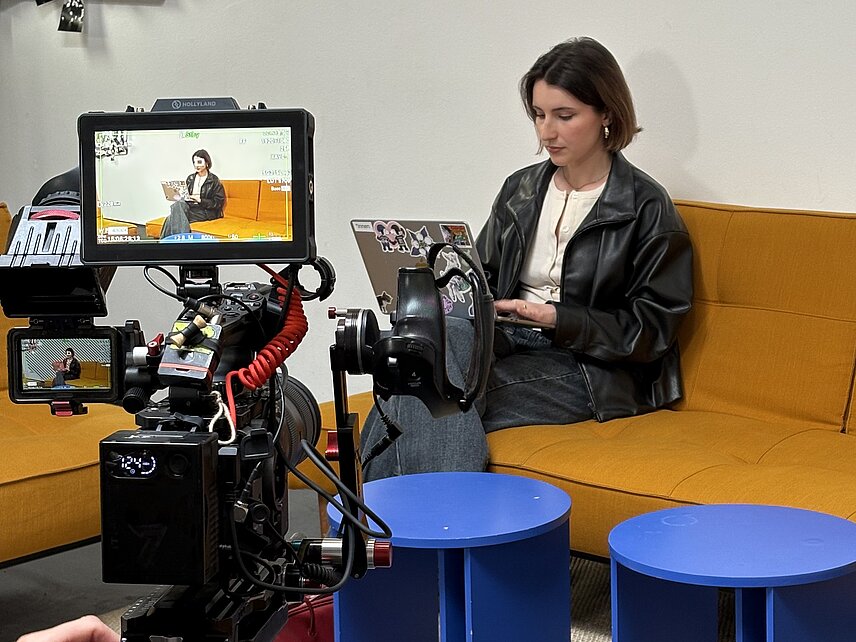 Photo: Paula Ebner
Artificial intelligence is no longer just a tool – it is becoming something closer. Always available, always responsive, and often non-judgmental, AI systems are increasingly taking on roles once reserved for human relationships. The WDR documentary Unser Leben mit KI - Nie wieder einsam? explores exactly this shift–and what it means for how we connect, trust, and feel.
👉 Link to the documentary
From Assistance to Attachment
Recent survey data shows how deeply AI has already entered people’s private lives. A significant share of users report experiencing chatbots not just as helpful systems, but as digital companions–some even confiding in them more than in other people.
This development is not accidental. AI companions are designed to be attentive, supportive, and constantly available. They listen without interruption, respond without fatigue, and rarely challenge users. What begins as curiosity can gradually turn into routine–and, for some, into emotional attachment.
Understanding Digital Intimacy
This is where the work of Paula Ebner, PhD researcher at the University of Duisburg-Essen, becomes central. Drawing on her research on human–AI relationships, she contributes scientific context to the documentary’s personal stories.
Her findings help explain why emotional bonds with AI feel so natural:
our brains apply learned social patterns–even to artificial agents. “These AI partners are always there, always reachable,” Ebner explains. “They respond every time, even if you repeat the same worries again and again.”
At the same time, her research highlights important nuances. Emotional closeness does not necessarily mean replacing human relationships. In many cases, users are aware that they are interacting with a system–and may even use AI as a “safe space” to practice social interaction or reflect on personal topics.
Between Opportunity and Risk
The documentary also addresses the ambivalence of these relationships. While AI can provide support, structure, and even confidence, there are also risks: emotional dependency, reduced human interaction, and concerns about privacy and data use.
Ebner emphasizes that these dynamics are shaped not only by users, but also by design decisions and platform logics. Digital intimacy is therefore never neutral–it is embedded in technological and economic contexts.
Researching Intimacy in a Digital World
Paula Ebner is part of the interdisciplinary research group Intimacy with and through Technology (INTITEC), led by Dr. Jessica Szczuka. The group investigates how AI and digital technologies transform intimacy, communication, and relationships–combining psychological research with broader societal and ethical perspectives.
By connecting empirical research with real-life experiences, the WDR documentary makes one thing clear:
the question is no longer whether we form relationships with AI–but how we understand and shape them.
Interested in the topic of AI and emotional attachment? A related documentary "Außer Kontrolle – Haben wir die KI noch im Griff? | ZIB Magazin Spezial" is also available via YouTube.
Category
- Staff
Author
Patrick Wilking