07.10.2026
Danyang Peng explores VR-based body mapping during her RC Trust internship.
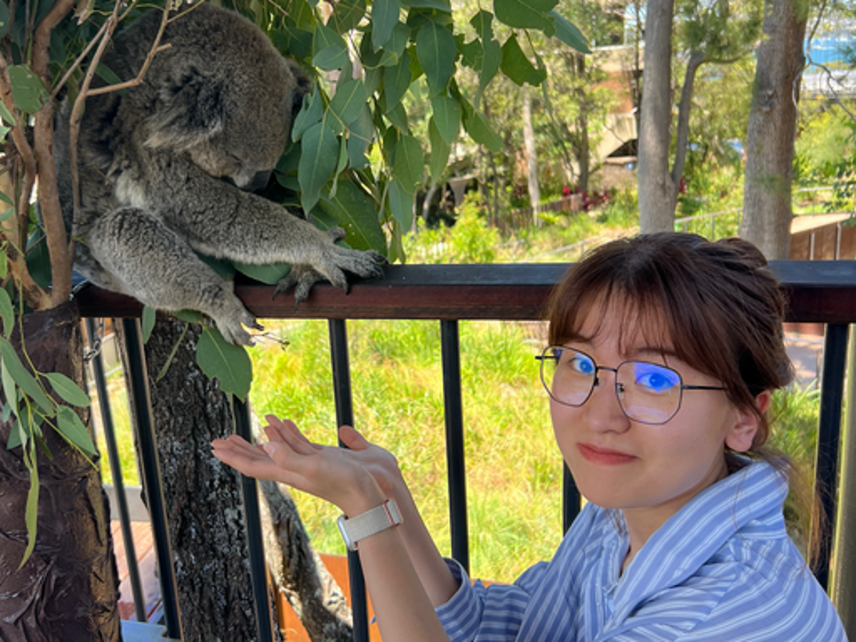 Photo: Danyang Peng
How can children express feelings that are difficult to put into words? Danyang Peng is exploring whether Virtual Reality can offer another way – through movement, bodily awareness, and creative expression. Her current project brings this question into practice during a research stay with Prof. Giulia Barbareschi’s Chair of Inclusive Technology and Collective Engagement at RC Trust in Duisburg, where Danyang is visiting from August until the end of October.
The project investigates a VR-based form of body mapping. This approach uses the body as a starting point for visually expressing experiences, sensations, or emotions. Danyang is examining how such a process can be transferred into an immersive environment while keeping the human guidance that remains important in art therapy.
The aim is not to replace therapists with technology. Instead, the project explores whether VR can offer children additional ways to reflect on their feelings and become more aware of how emotions relate to their bodies.
Designing for different ways of interacting
A particular focus lies on inclusive interaction. Danyang is exploring different ways of painting and controlling elements in VR so that children with different mobility needs can participate. By working with children with and without disabilities, the project seeks insights for embodied, child-centered experiences at the intersection of Human-Computer Interaction, inclusive design, and affective computing.
The research has already moved between different cultural and practical contexts. In Tokyo, Danyang conducted initial co-design workshops with art therapists and designers, developing a preliminary body-mapping process and a first VR prototype. At RC Trust, the design was further adapted together with local teachers before workshops were conducted with children at a German primary school.
This shift from technological development toward real-world application is one reason why Giulia Barbareschi’s group provided a particularly fitting environment. The Inclusive Technology and Collective Engagement group investigates how technologies can be developed and adapted in close collaboration with the people and communities who will ultimately use them.
Danyang is a PhD candidate of the Embodied Media Lab at the Graduate School of Media Design, Keio University and a collaborative researcher at Yokohama City University School of Medicine. Her broader research spans XR, haptics, meditation, mental well-being, and affective computing, with an increasing focus on immersive interaction and art therapy. She is conducting this research as part of the JST ASPIRE project, “Enhancing Humanity: International Research Collaboration Network Towards an Inclusive Future through Human Augmentation,” funded by the Japan Science and Technology Agency (JST).
The stay in Duisburg has also given her new perspectives on research culture and interdisciplinary collaboration. After returning to Japan, Danyang will complete her PhD and prepare for her dissertation defense. Looking ahead, she is interested in exploring how children in Germany and Japan may differ in expressing themselves through art-based approaches.
For Danyang, one lesson from the internship stands out: research should extend beyond the laboratory. Researchers need to engage with communities, understand real-world contexts, and translate technological possibilities into meaningful impact.
International perspectives at RC Trust
The RC Trust Internship Program gives international students and early-career researchers the opportunity to work within the Center’s research groups, contribute their own expertise, and experience different disciplinary and research cultures. At the same time, visiting researchers bring new perspectives into the RC Trust network – creating connections that can continue beyond their stay in the Ruhr region.
Category
- Inclusive Technology and Collective Engagement
- Internship Program
Author
Patrick Wilking