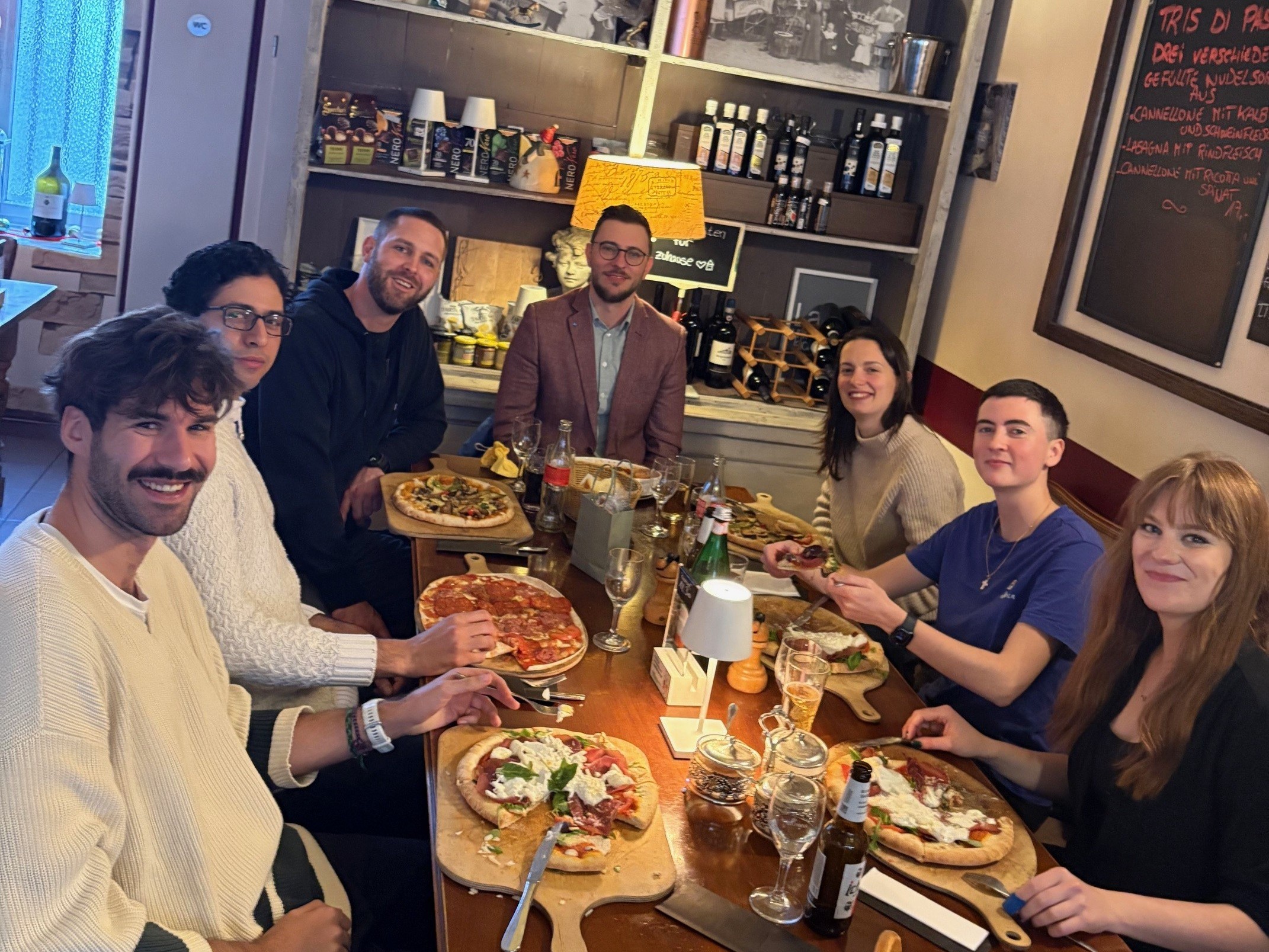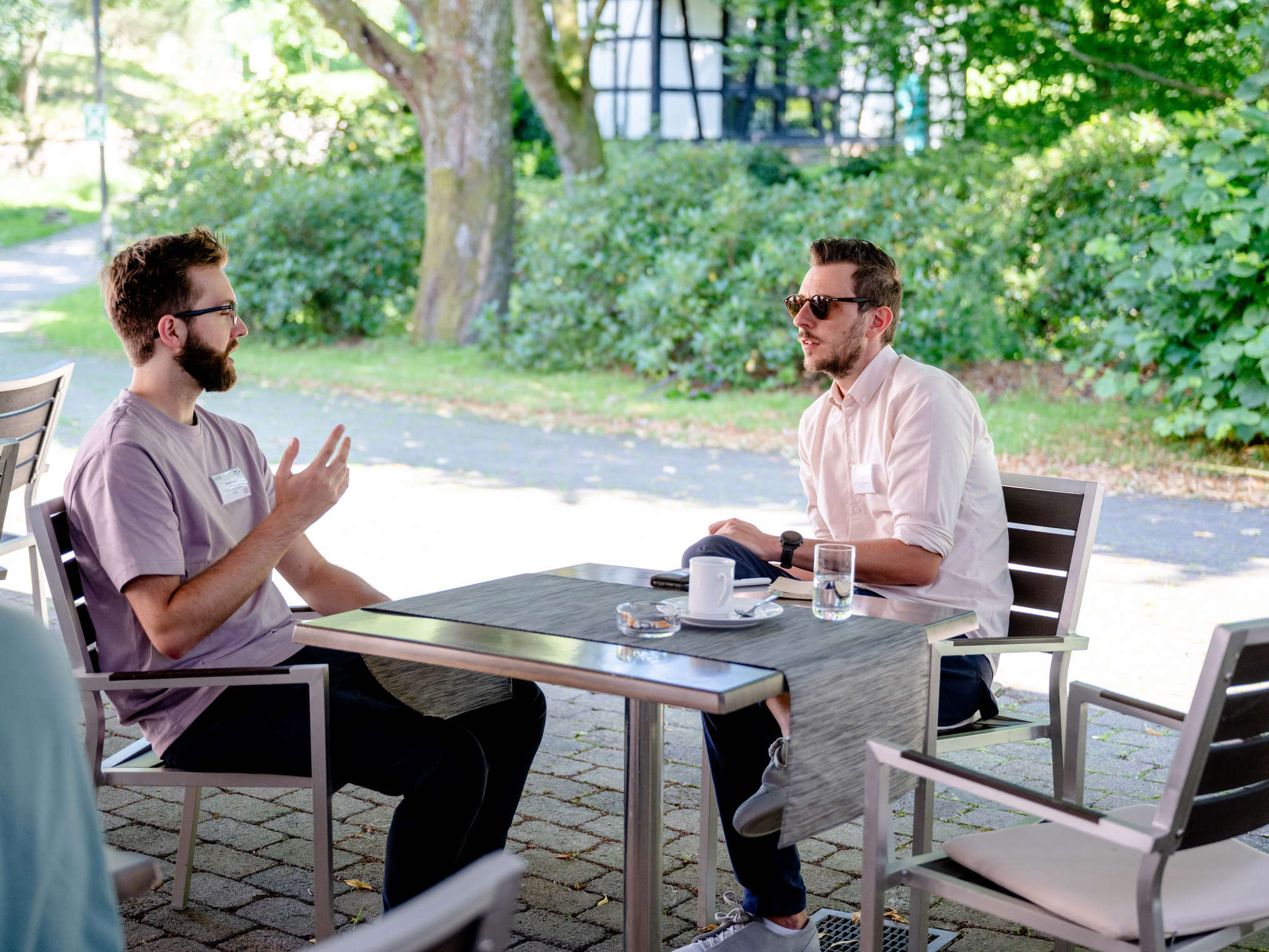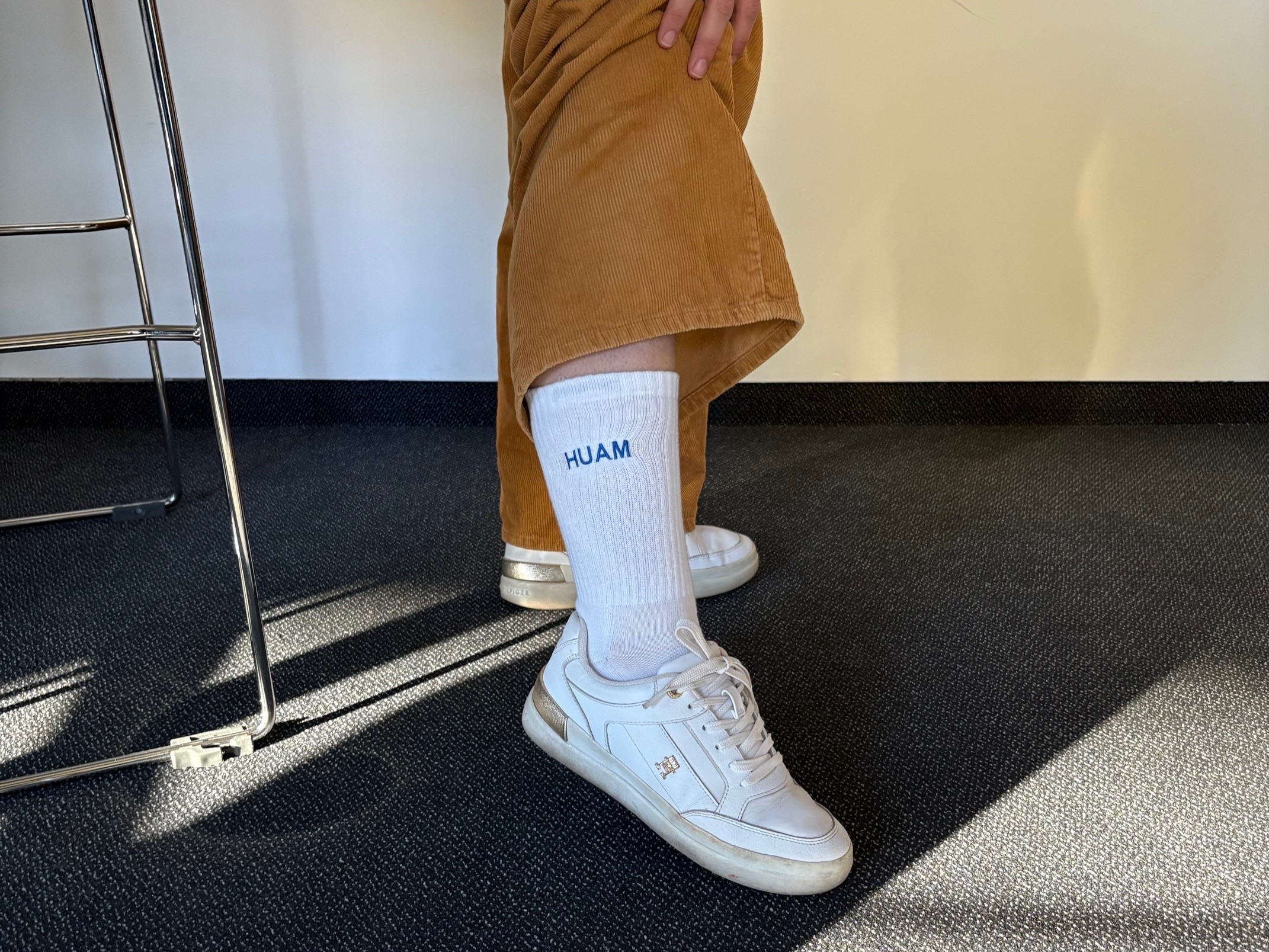
HUAM is a place to experiment and grow

We advance cutting-edge research on human and machine behavior through open collaboration, intellectual curiosity, and a shared commitment to learning across disciplines.

Guiding Principles:

  1. Experimentation as Method and Culture: Experimentation defines both what we study and how we work. In our research, we employ rigorous experimental approaches to understand both human and machine behavior. We value replication, robustness, and transparency as much as novel findings. In our daily collaboration, we apply the same experimental mindset: trying new formats, (AI) tools, and ways of working; iterating quickly; and aiming to learn from what works and...what doesn’t. We prefer thoughtful experimentation over rigid routines.
  2. Growth Mindset: We believe that excellent research and strong researchers are developed, not fixed. We see research as a learning process rather than a performance of certainty. This means embracing intellectual risk, treating mistakes as data, and supporting each other’s development at every career stage. We aim to create an environment where people can grow by providing honest and constructive feedback.
  3. True Interdisciplinarity: We practice interdisciplinarity as collaboration among equals. HUAM brings together expertise from multiple disciplines (among others, psychology, economics, and computer science) to address questions that no single field can answer alone. We reject a “service” model of interdisciplinarity, in which one discipline merely serves another. Instead, theories, methods, and standards from different fields jointly shape our research questions, designs, and interpretations.

What we do

Our group studies how emerging technologies, specifically artificial intelligence (AI), shape human behavior – ranging from cooperation over trust to ethics. Our research combines (behavioral) experiments, large-scale surveys, and experience sampling to capture both controlled and real-world interactions. 

By bringing together interdisciplinary expertise from social sciences, psychology, and computer science, we create a comprehensive understanding of human-machine dynamics.
Our goal is to provide evidence-based insights for policy and practice, ensuring that the integration of AI into society supports fairness, transparency, and human well-being.

Concrete research areas include

If you want to know more about the human understanding of algorithms and machines just reach out to our team members.

Who we are

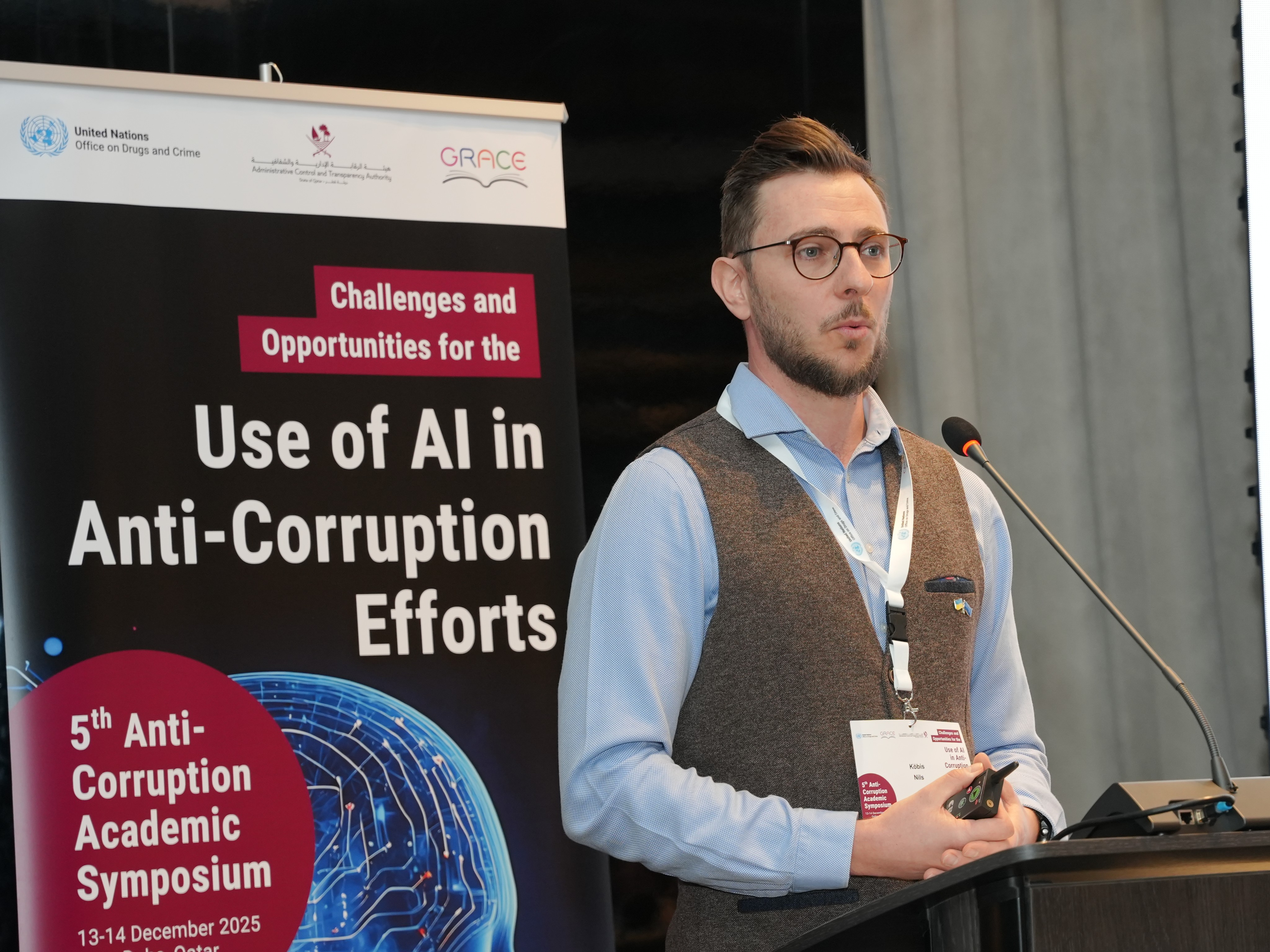
Portrait of Nils Köbis

Human Understanding of Algorithms and Machines

Prof. Dr. Nils Köbis

University of Duisburg-Essen
Tectrum Duisburg
Bismarckstraße 120
Room 3.1.OG.1130
47057 Duisburg
Germany

Office Prof Köbis & Singh

Sebastian Meinken

University of Duisburg-Essen
Tectrum, Room 31.OG.3324

Phone: +49 203 37 96032
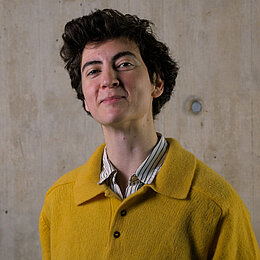
Portrait Oksana Huss

Associate Researcher

Dr. Oksana Huss

University of Duisburg-Essen
Tectrum Duisburg
Bismarckstraße 120
47057 Duisburg
Germany

PostDoc

Dr. Bianca Nowak

University of Duisburg-Essen
Tectrum Duisburg
Bismarckstraße 120
Room 3.1. OG 1128
47057 Duisburg
Germany

PostDoc

Dr. Inês Terrucha

University of Duisburg-Essen
Tectrum Duisburg
Bismarckstraße 120
47057 Duisburg

PhD

Fabian Albers

University of Duisburg-Essen
Tectrum Duisburg
Room 3.1 OG 1128
Bismarckstraße 120
47057 Duisburg
Germany

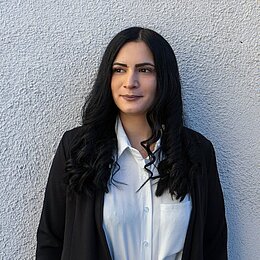
PhD

Carolina Gerli

University of Duisburg-Essen
Tectrum Duisburg
Bismarckstraße 120
47057 Duisburg
Germany

PhD

Christian Nickel

University of Duisburg-Essen
Tectrum Duisburg
Bismarckstraße 120
47057 Duisburg
Germany
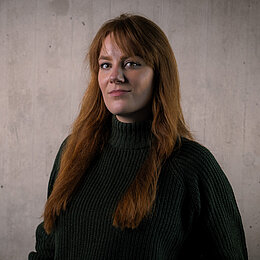
PhD

Alfio Ventura

University of Duisburg-Essen
Tectrum Duisburg
Bismarckstraße 120
Room 3.1.OG.1129
47057 Duisburg
Germany

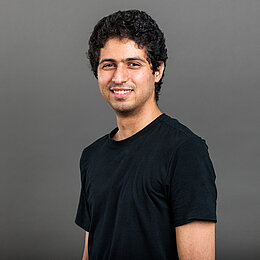
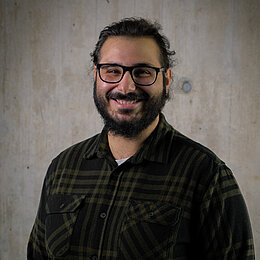
technical research assistant

Iheb Dridi

University of Duisburg-Essen
Tectrum Duisburg
Bismarckstraße 120
47057 Duisburg

Germany

Mobile: +49 157 736 75557
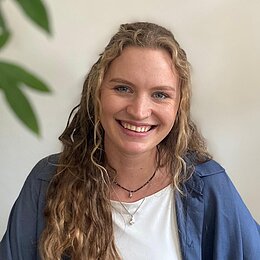
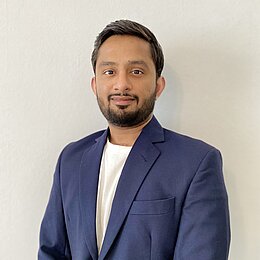
Research Assistant

Murtaza Fakhruddin

TU Dortmund
Tectrum,
Duisburg
Bismarckstrasse 120
47057 Duisburg
Germany

research assistant

Sarah Langener

University of Duisburg-Essen
Tectrum Duisburg
Bismarckstraße 120
47057 Duisburg
Germany
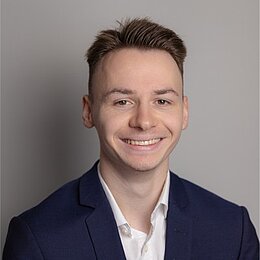
Alumni

Dylan Cooper

University College London

Alumni

Eleni Petta

University of Duisburg-Essen

Where we are

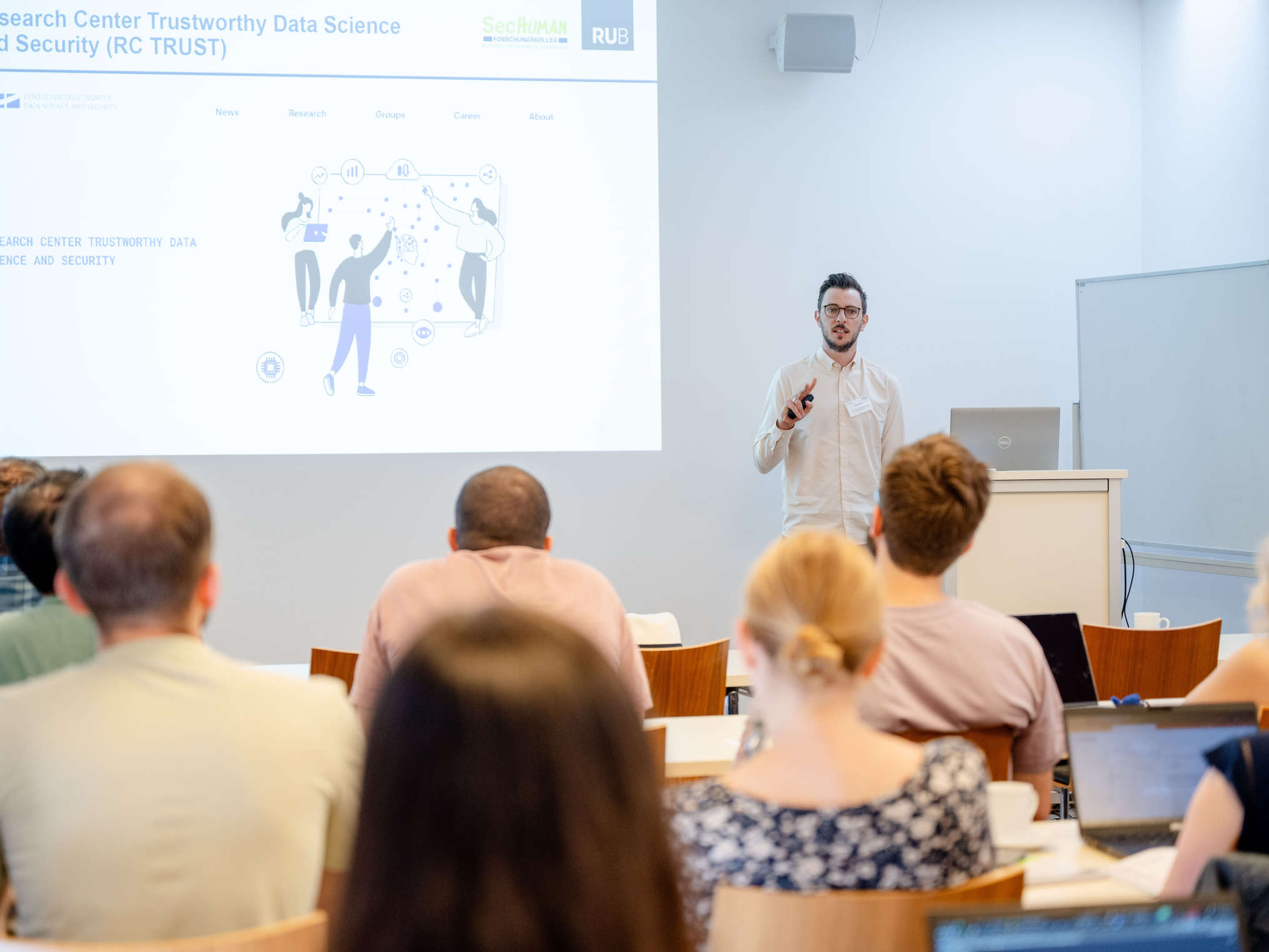
We are part of the Research Center Trustworthy Data Science and Security, a newly founded hub dedicated to ensuring the trustworthiness of intelligent systems in safety-critical applications through an interdisciplinary, human-centered research approach. It is one of four centers established in 2021 by the Research Alliance Ruhr, a joint initiative of Ruhr University Bochum, TU Dortmund University, and the University of Duisburg-Essen to address some of society’s most pressing challenges.

Our group is based in the Tectrum in Duisburg, at the heart of the Ruhr Valley region - one of Europe’s largest yet greenest metropolitan areas and the region with the highest university density in Germany.

Tectrum in Duisburg

More updates can be found on LinkedIn

Selected Key Publications

  • article
N. Köbis, Z. Rahwan, R. Rilla, B. I. Supriyatno, C. Bersch, T. Ajaj, J. Bonnefon and I. Rahwan Delegation to artificial intelligence can increase dishonest behaviourNature, vol. 646, no. 8083, pp. 126—134, Sep. 2025. Springer Science and Business Media LLC.
[DOI]
  • article
C. Starke, K. Kieslich, M. Reichert and N. KöbisDesigning algorithms against corruption: a conjoint study on communicative features to encourage intentions for collective actionJournal of Information Technology & Politics, pp. 1—17, Feb. 2025. Informa UK Limited.
[DOI]
  • article
M. Leib, N. Köbis and I. Soraperra Does AI and human advice mitigate punishment for selfish behavior? An experiment on AI ethics from a psychological perspectiveComputers in Human Behavior, vol. 171, pp. 108709, Oct. 2025. Elsevier BV.
[DOI]
  • article
E. Schmidt, C. Bersch, N. Köbis, J. Bonnefon, I. Rahwan and M. Dong First interactions with generative chatbots shape local but not global sentiments about AIComputers in Human Behavior: Artificial Humans, vol. 6, pp. 100223, Dec. 2025. Elsevier BV.
[DOI]
  • article
I. Terrucha, E. Fernández Domingos, R. Suchon, F. C. Santos, P. Simoens and T. Lenaerts Humans program artificial delegates to accurately solve collective-risk dilemmas but lack precisionProceedings of the National Academy of Sciences, vol. 122, no. 25, Jun. 2025. Proceedings of the National Academy of Sciences.
[DOI]
  • article
N. Köbis, S. Oded, A. L. Bruijn, S. Huang and B. Rooij Is Less More? Field Evidence on the Impact of Anti-Bribery Policies on Employee Knowledge and Corrupt BehaviorRegulation & Governance, May 2025. Wiley.
[DOI]
  • article
Z. A. Purcell, M. Jakesch, M. Dong, A. Nussberger and N. KöbisWriting with AI boosts trust-building efficiencyiScience, vol. 28, no. 12, pp. 114092, Dec. 2025. Elsevier BV.
[DOI]
  • inbook
B. Nowak, Y. Meier and N. KrämerChallenges in Defining and Measuring Trust and Distrust in Science in Science Communication and Trust, Springer Nature Singapore, 2025, pp. 365—384.
[DOI]
  • incollection
S. Shalvi, E. E. Levine, I. Thielmann, E. Jayawickreme, B. V. Rooij, K. Teodorescu, A. Schurr, R. M. Furr, S. M. Aglioti, I. Zettler, T. R. Cohen, A. Pittarello, R. Barkan, N. Köbis, M. Leib, P. Mitkidis, J. Schulz, E. Dimant, G. A. Kleef, K. A. Ścigała, R. M. Rilke, S. Ayal, B. Beersma, O. Plonsky, B. Hilbig, O. Weisel, F. Butera, Y. Feldman, B. Verschuere, C. Zanetti, G. Hochman, M. E. Kret, E. Peer, V. Capraro, A. R. Dorrough, S. Speer and I. Ritov Chapter Five - The science of honesty: A review and research agenda Bertram Gawronski, Eds. Academic Press, 2025, pp. 241—327.
[DOI]
  • article
Z. Purcell, M. Dong, A. Nussberger, N. Köbis and M. Jakesch People have different expectations for their own versus others' use of AI-mediated communication toolsBritish Journal of Psychology, Sep. 2024. Wiley.
[DOI]
  • article
J. H. Zickfeld, K. A. Ścigała, C. T. Elbaek, J. Michael, M. H. Tønnesen, G. Levy, S. Ayal, I. Thielmann, L. Nockur, E. Peer, V. Capraro, R. Barkan, S. Bø, Š. Bahník, D. Nosenzo, R. Hertwig, N. Mazar, A. Weiss, A. Koessler, R. Montal-Rosenberg, S. Hafenbrädl, Y. A. Nielsen, P. Kanngiesser, S. Schindler, P. Gerlach, N. Köbis, N. Jacquemet, M. Vranka, D. Ariely, J. B. Martuza, Y. Feldman, M. Białek, J. K. Woike, Z. Rahwan, A. Seidl, E. Chou, A. Kajackaite, S. Schudy, U. Glogowsky, A. Z. Czarna, S. Pfattheicher and P. Mitkidis Effectiveness of ex ante honesty oaths in reducing dishonesty depends on contentNature Human Behaviour, vol. 9, no. 1, pp. 169—187, Oct. 2024. Springer Science and Business Media LLC.
[DOI]
  • article
E. Schmidt, S. Bonati, N. Köbis and I. Soraperra GPT-3.5 altruistic advice is sensitive to reciprocal concerns but not to strategic riskScientific Reports, vol. 14, no. 1, Sep. 2024. Springer Science and Business Media LLC.
[DOI]
  • article
A. Schenk, V. Klockmann, J. Bonnefon, I. Rahwan and N. KöbisLie detection algorithms disrupt the social dynamics of accusation behavioriScience, vol. 27, no. 7, pp. 110201, Jun. 2024. Elsevier BV.
[DOI]
  • article
C. Starke, A. Ventura, C. Bersch, M. Cha, C. Vreese, P. Doebler, M. Dong, N. Krämer, M. Leib, J. Peter, L. Schäfer, I. Soraperra, J. Szczuka, E. Tuchtfeld, R. Wald and N. KöbisRisks and protective measures for synthetic relationshipsNature Human Behaviour, vol. 8, no. 10, pp. 1834—1836, Oct. 2024. Springer Science and Business Media LLC.
[DOI]
  • inbook
J. Forjan, N. Köbis and C. Starke Artificial intelligence as a weapon to fight corruption: Civil society actors on the benefits and risks of existing bottom-up approaches in Digital Media and Grassroots Anti-Corruption, Edward Elgar Publishing, May 2024, pp. 229—249.
[DOI]
Scroll To Top